




Key Takeaways:
- Effective delegation helps managers focus on higher-level priorities while giving employees more opportunities to grow.
- Good delegation depends on matching responsibilities to the right person, setting clear expectations, and providing appropriate support.
- Managers should guide employees without stepping in too quickly or taking the work back.
Introduction
Delegation sounds straightforward until you have to do it as a manager. You know you cannot personally handle every client issue, project update, approval, or operational task, yet handing responsibility to someone else can feel risky when you remain accountable for the outcome.
Through our leadership training courses, you learn to approach delegation as more than simply passing work to someone else. Using practical scenarios, guided discussions, and role-play, our trainers help participants examine your existing delegation habits and work through how much guidance, feedback, and accountability different situations may require.
When these decisions are handled well, effective delegation gives you more capacity to lead while helping employees build confidence, judgement, and ownership.
Why We Think Delegation Matters in Leadership
From a trainer’s perspective, delegation is one of the clearest signs of how a manager leads. It shows whether they can trust their team, communicate expectations well, and create space for others to take responsibility and grow.
Helps Focus on Strategic Priorities
Good delegation in leadership gives you more space to focus on priorities that genuinely require your attention, such as planning, coaching, stakeholder management, and broader team decisions. Instead of asking, “What can I get someone else to do?”, consider, “Which responsibilities still need my involvement, and which could become a development opportunity for someone else?”
Creates Opportunities for Employee Growth
Some development opportunities cannot be recreated through explanation alone. An employee may need to lead a client discussion, coordinate a project, resolve an unexpected problem, or make a decision within agreed boundaries to develop confidence.
By delegating effectively, you can give employees opportunities to lead discussions, manage projects, or make decisions. This can gradually build their confidence and capability before they take on larger responsibilities.
Builds Trust and Team Ownership
Employees quickly notice whether a manager genuinely trusts them. Assigning responsibility and then rewriting every email or overriding every minor decision sends a very different message from giving someone clear boundaries and space to perform.
Well-managed delegation can strengthen employee accountability because employees understand what they own, what decisions they can make, and what result they are responsible for delivering.
What We Teach About Delegation
Delegation works best when managers make a few key decisions upfront. Our goal is to help you clarify who should own the task and what needs to be achieved.
Match the Responsibility to the Person
Delegation should not simply mean giving the next task to whoever happens to be available. We encourage managers to consider capability, experience, workload, confidence, and development needs.
A reliable employee who already performs a task comfortably may be the safest choice, but another employee may benefit more from the opportunity if appropriate support is available. For example, instead of automatically asking a senior team member to prepare every monthly presentation, a manager might let a newer employee prepare one section first, explain their reasoning, and gradually take responsibility for more of the presentation.
Make the Outcome Clear
A common delegation mistake is giving instructions without explaining the outcome. “Put together the report by Friday” leaves several questions unanswered. Who will read it? What decision will it support? What information matters most? Does the manager need a first draft or a finished document?
Managers need to establish the expected outcome, deadline, available resources, decision-making boundaries, and points where consultation is required. That clarity allows employees to work independently without returning for approval at every step.
Support Without Taking the Work Back
Managers sometimes delegate a task, then step back in as soon as the employee runs into difficulty. Our trainers help managers recognise the difference between providing support and taking the work back.
Instead of immediately giving the answer, they can ask what the employee has considered, what risks they see, and which option they would recommend. This keeps the manager available for guidance while giving the employee space to strengthen their judgement and problem-solving skills.
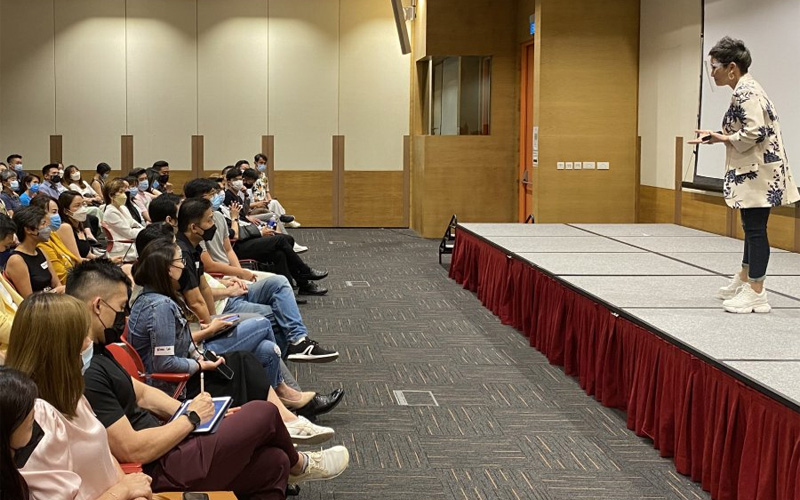
How Effective Delegation Empowers Teams
When managers delegate well, the benefits extend beyond workload management. Employees are offered more room to make decisions and build confidence through experience. Our leadership masterclass helps managers create these opportunities through practical, applied learning.
- Define decision rights: Be clear about what employees can decide independently, what requires consultation, and what still needs manager approval.
- Ask for recommendations, not just updates: Instead of solving every issue yourself, ask employees to explain the options they have considered and recommend a way forward. This encourages stronger problem-solving while supporting better team productivity.
- Use check-ins to build independence: Agree on progress points rather than monitoring every step. As capability grows, managers can reduce check-in frequency and give employees more autonomy.
Common Delegation Challenges We Help Address
Even experienced managers can struggle with delegation. In our training, we help them recognise habits that limit trust, clarity, and employee ownership.
“It Will Be Faster If I Do It Myself”
You may have more experience and be able to complete the task faster yourself. However, if speed becomes the main reason for not delegating, employees have fewer opportunities to develop. In this situation, we advise balancing short-term efficiency with the longer-term goal of building capability and confidence within the team.
Fear of Losing Control
Delegation does not require managers to disappear from the process. They can agree on milestones, identify higher-risk decisions that require consultation, and set clear expectations about progress updates. The goal is controlled autonomy rather than either extreme: micromanagement or complete disengagement.
Communicating the Same Way With Everyone
Different employees may require different levels of context, reassurance, feedback, or independence. Understanding these differences is why behavioural awareness and communication form an important part of our soft skill training. Managers who adapt how they communicate can provide support without treating every employee identically.
Helping You Lead Through Effective Delegation
Effective delegation ultimately requires judgement. Managers need to balance trust with accountability, provide enough direction without controlling every detail, and recognise when an employee needs support versus room to solve the problem independently.
At Lusi Group, we use practical and experiential approaches to help managers examine how they communicate, make decisions, provide feedback, and respond when responsibility is shared across a team. The objective is not simply to help managers get more work off their desks. It is to develop leaders who can build capable teams that think, contribute, and take meaningful ownership of their responsibilities.
Contact us to explore how our training approach can support your managers and teams.
 Login with Google